Battery Park
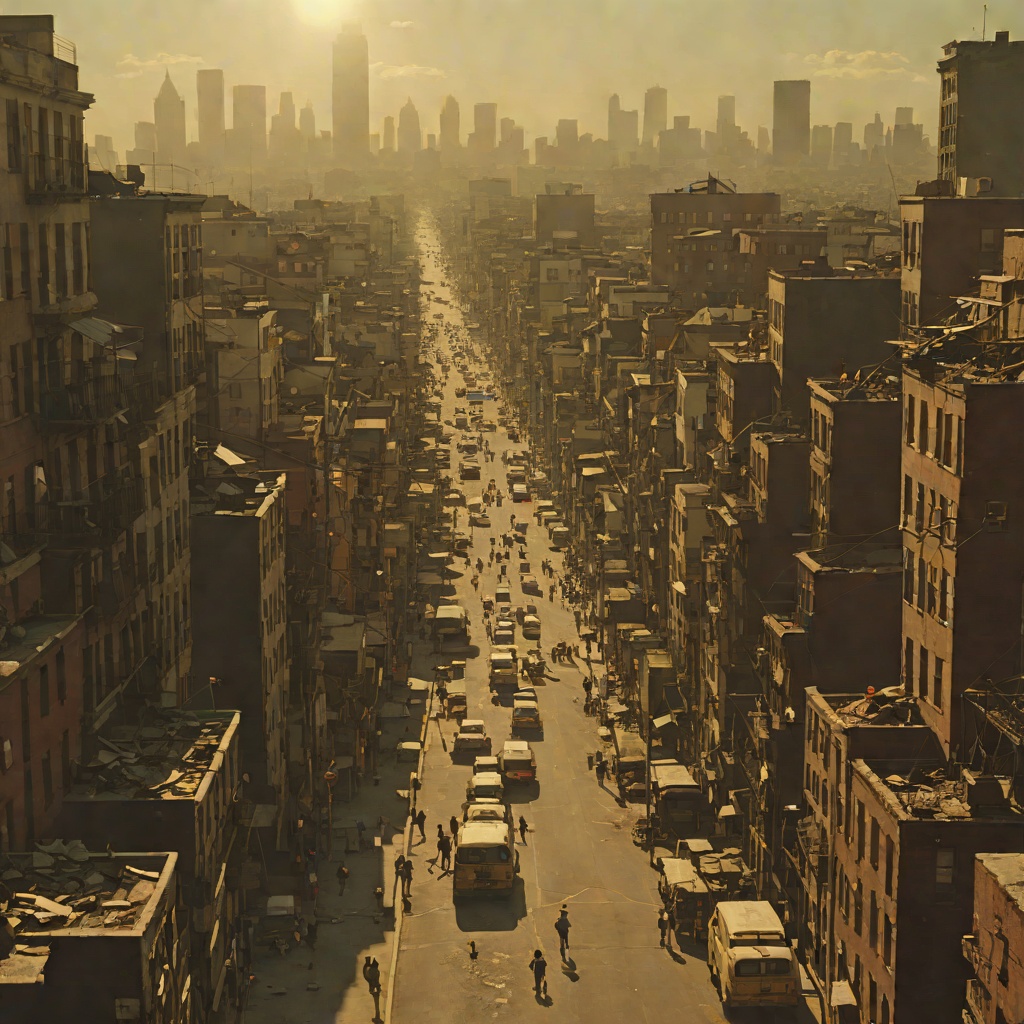
City of GodBattery Park, at the southern tip of Manhattan, is one of the novel's most resonant urban settings, a place where the city's commercial and spiritual energies visibly collide. It is introduced on a warm autumn afternoon, with a soft breeze and rock doves swirling through the air, their wings carrying the grit of the city. The narrator stands there, looking back at the financial skyline of lower Manhattan, which he describes as an island cathedral, a religioplex—a term that captures how the towers of commerce take on a sacred, almost liturgical quality when seen from this vantage point. The park itself becomes a stage for the city's strange and contradictory life, where the sacred and the profane, the eternal and the ephemeral, are constantly in play.
The Watch Peddler and the City's Sacred Commerce
The park's first significant scene centers on a peddler of watches, a fellow with dreadlocks and a big smile, standing tall in a purple chorister's robe, his sacral presence not diminished by the new white Nikes on his feet. He hawks his wares in a patois that promises they need no winding, can be taken in the shower, are proof against everything, and are set with diamonds and such, keeping the right time all the time. This figure is a perfect emblem of the novel's urban vision: a man dressed in the vestments of religious office, selling time itself in a public park, his robe and sneakers together forming a kind of street-corner liturgy. The encounter is brief, but it establishes Battery Park as a place where the city's commercial hustle is shot through with an almost priestly theatricality, where the most mundane transactions can take on a sacramental glow.
A Threshold of Discovery and Return
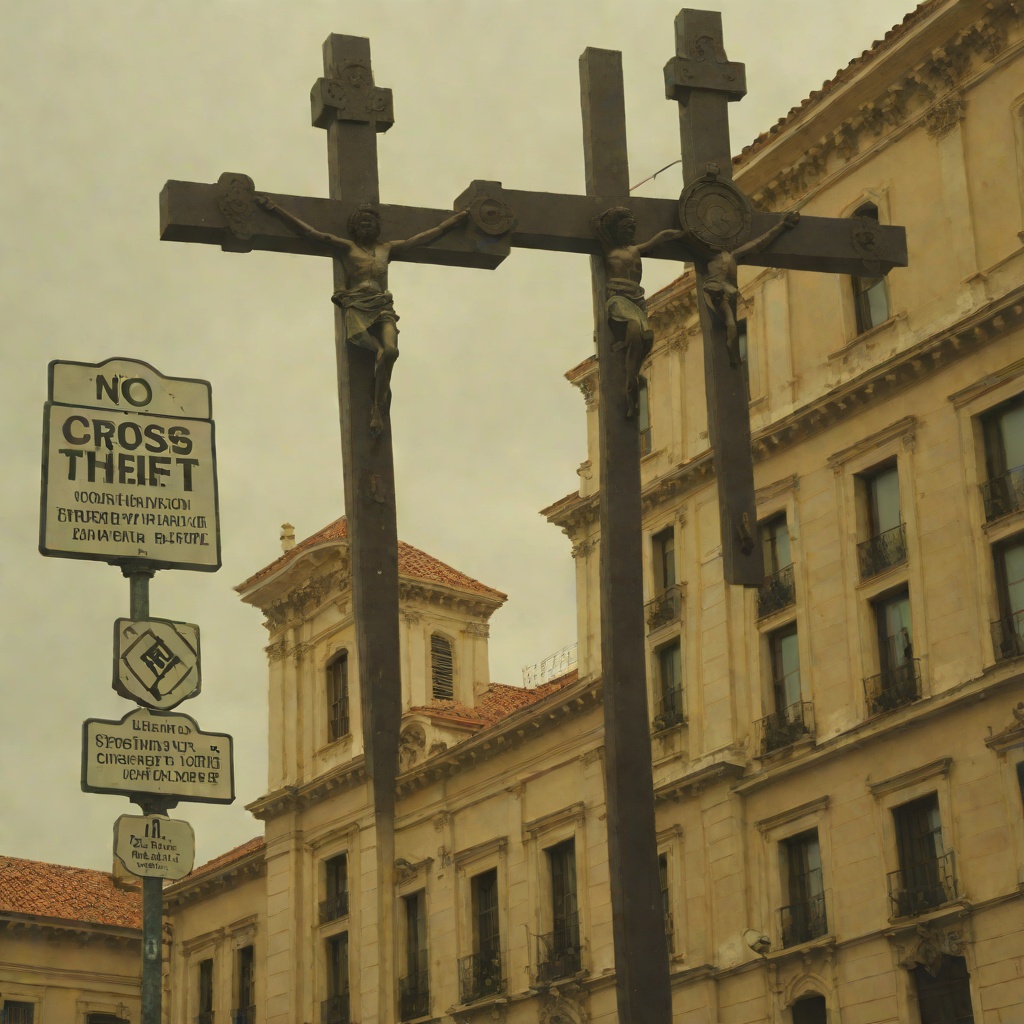
Battery Park also functions as a point of departure and return in the novel's central mystery. It is from this park that the narrator, fumbling with a searchlight, sees a shadow rising with distinction, something with right angles in the vanished instant of a turned corner, and rushes back into the church to find that the big brass cross has been replaced by a shadow of the crucifix in the unfaded paint of a predecessor's poor taste. The theft of the cross, which sets the novel's plot in motion, is thus framed by the park's proximity to the church, as if the city's open, secular space were the natural origin of this sacrilege. Later, the cross is discovered lying flat on the roof of the Synagogue of Evolutionary Judaism, its transverse exactly parallel to the front of the building, its upright pressed against the granite pediment, tarnished and shining in the autumn sun. The journey of the cross from the church to the synagogue, and the narrator's own journey to find it, begins and ends in the shadow of Battery Park's skyline, making the park a silent witness to the novel's central act of displacement and re-sacralization.
The Park as a Microcosm of the City's Soul
Beyond its role in the plot, Battery Park embodies the novel's broader meditation on the city as a living organism. The narrator reflects that the city may begin from a marketplace, a trading post, the confluence of waters, but it secretly depends on the human need to walk among strangers. In the park, as on any busy corner, thousands of lives head in all four directions, on foot, on bikes, on in-line skates, in buses, strollers, cars, and trucks, with the subway rumble underneath. This spectacle is described as the most spectacular phenomenon in the unnatural world, a primatial over-soul, a species recognition that is never acknowledged. Each passerby—scruffy, oversize, undersize, weird, fat, bony, limping, muttering, foreign-looking, green-haired, threatening, crazy, angry, inconsolable—is a New Yorker, native to the same diaspora as the narrator, part of a great sputtering experiment in a universalist society proposing a world without nations where anyone can be anything and the ID is planetary. Battery Park, with its view of the harbor and the skyline, is the purest expression of this idea: a place where the city's diversity and its underlying unity are simultaneously visible.
The Park in the City's Wider Ecology
The novel's ecological imagination, which extends to the City of Birds at Valdemingomez and the ant colonies of Central Park, also touches Battery Park. The rock doves that swarm the park are part of the same urban aviary that includes the storks, hawks, egrets, and condors of the Madrid dump, and the brown ants that the narrator watches with the boys in Central Park, each not an eighth of an inch long, building an underground city. These creatures, like the human crowds of Battery Park, are described as parts of a group brain, an invisible organ of thought beyond the capacity of any one of them to understand. The park, with its birds and its human masses, is thus a node in the novel's vision of the city as a super-organism, where individual wills are subsumed into a larger, unlocatable intelligence. The narrator's speculation about the ants' aggregate thought—that if one watches one person, one couple, one family, one child, one can assure oneself of the integrity of the individual will, but when the masses celebrate a beautiful day, a different order of being emerges—finds its most immediate illustration in the crowds of Battery Park.
A Place of Reflection and Judgment
Finally, Battery Park is a place where the novel's theological concerns are brought into sharp focus. The narrator's reflections on the city's sacred commerce, on the theft of the cross, and on the nature of urban life all converge here, making the park a kind of secular sanctuary where the questions of faith and doubt that animate the novel can be contemplated. The park's position at the city's edge, looking out toward the harbor and the wider world, gives it a liminal quality, a threshold between the known and the unknown, the sacred and the profane. It is fitting that the novel's most explicit meditation on the degradation of the idea of life—the prayer that speaks of the monstrously evil mortifiers of humanity, the exponential murder of souls, the torture and agony of demolishment—should resonate with the park's atmosphere of transience and possibility. Battery Park, in its brief appearances, thus becomes more than a setting; it is a symbol of the city's soul, a place where the human need to walk among strangers meets the eternal questions of faith, sacrifice, and redemption.